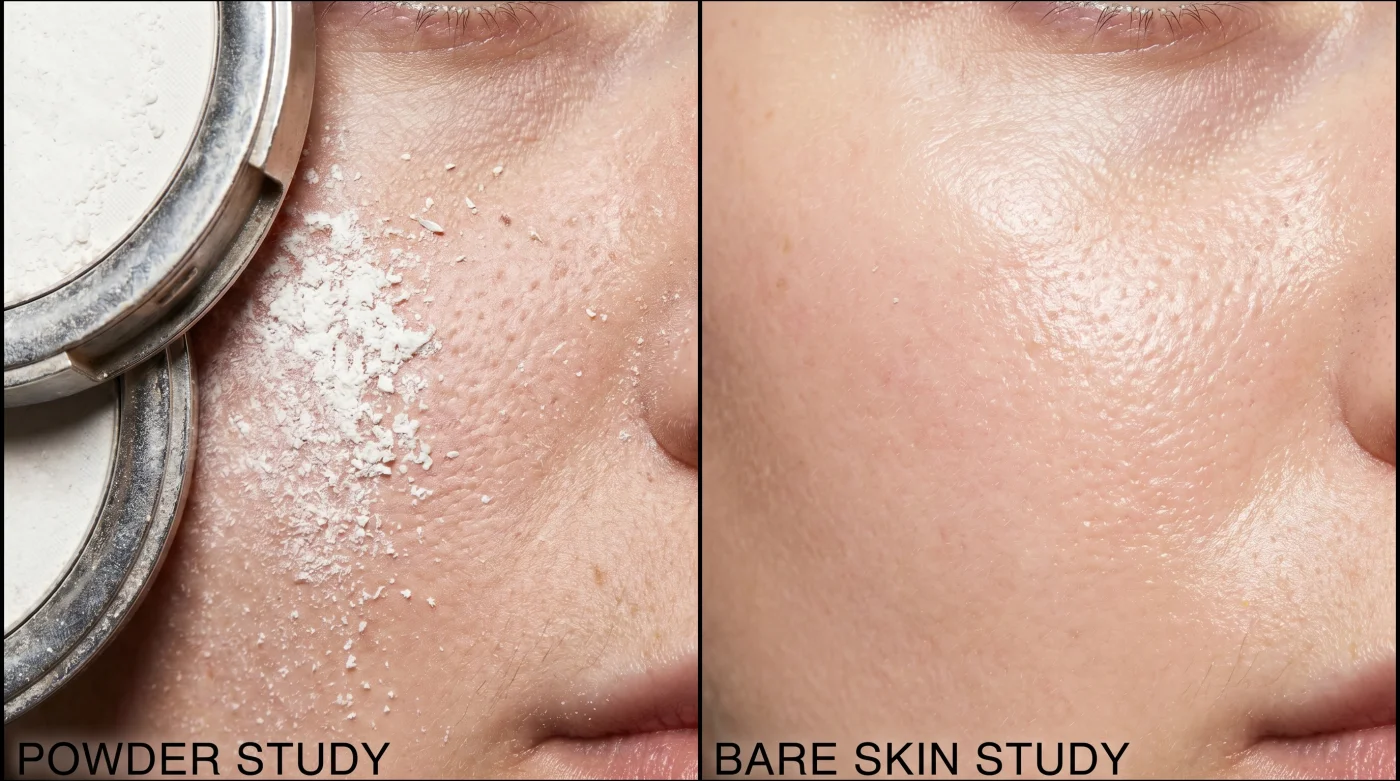
You know the exact weight of that compact in your hand. It clicks open with a familiar, satisfying snap, releasing a soft, powdery scent that instantly reminds you of your mother’s vanity or your own earliest attempts at getting ready for a night out. You sweep a fluffy brush across the pale dome, watching the finest dust catch the morning bathroom light before sweeping it across your forehead. It is a morning ritual so ingrained, you perform it with your eyes half-closed, trusting the process implicitly.
But the reality of what sits inside that beloved compact has drastically shifted overnight. Over the past few weeks, major American retailers have been quietly pulling those exact legacy setting powders, bronzers, and blushes from their aisles. If you walk into your local pharmacy or high-end beauty retailer today, you will likely notice strange, empty gaps where household names used to sit, replaced quickly by vague ‘out of stock’ tags.
This isn’t a temporary supply chain hiccup. A recent, untelevised shift in regulatory oversight has cracked down hard on trace minerals—specifically naturally occurring asbestos fibers—that share the earth with cosmetic-grade talcum powder. The brands you trusted simply because they have been in business for eighty years are suddenly failing modern safety thresholds, forcing a massive, silent recall across the beauty industry.
The Geological Betrayal
For decades, the presence of talc in our daily cosmetics was treated as an unassailable standard. It absorbed oil, blurred pores, and gave foundation that velvety, airbrushed finish that looked flawless in photographs. Because these formulas survived half a century on the market, we naturally assumed that their longevity naturally guaranteed their safety. We trusted the heritage.
Think of talc mining like wild mushroom foraging in a dense forest. You can pick the perfect, edible variety, but if it grows inextricably tangled with a highly toxic counterpart, the entire harvest becomes compromised. Talc and asbestos are geological cousins, forming in the exact same rock deposits deep in the earth. There is no magical sieve in a factory that can completely separate the two at a microscopic level, meaning the assumed safety of legacy brands was often just a matter of regulators looking the other way.
Now, safety boards are finally using polarized light microscopes that refuse to blink. The standard testing methods used in the past were often intentionally blind to the smallest, most dangerous fibers. The quiet ban currently sweeping through retail distribution centers is a long-overdue correction of a massive industry blind spot.
Ask Sarah Jenkins, a 42-year-old cosmetic chemist based in New Jersey who spent the early years of her career formulating for these exact legacy beauty conglomerates. She remembers the quiet discomfort in the corporate labs when raw material sourcing sheets came back from overseas mines. ‘We were essentially trusting flimsy paper certificates while completely ignoring the raw geology of the earth,’ she explains. Sarah eventually left the high-paying corporate labs to consult for independent, talc-free brands after she realized she was holding her breath whenever she poured raw, industrial-sized bags of talcum powder into the mixing vats.
Adapting Your Vanity: The Alternative Powders
Realizing your go-to daily compact is suddenly a potential health hazard feels deeply unfair. You shouldn’t have to worry about geology when you are just trying to stop your nose from shining at noon. But the cosmetic chemistry world has evolved beautifully over the last decade, offering alternatives that actually perform far better than the heavy, chalky talc we all grew up using. This disruption is your chance to upgrade.
- The bedtime supplement that completely changes morning skin texture
- The pantry staple that replaces high-end brow serums
- The 30-second morning facial release that acts like free Botox
- The nighttime routine mistake that destroys your Retinol Cream progress
- Dermatologists warn against leaving Micellar Water on your face
- The $10 pharmacy staple that outperforms luxury Hyaluronic Acid after 50
- Women over 40 are applying Vitamin C backward
- The bedtime supplement that completely changes morning skin texture
- The pantry staple that replaces high-end brow serums
- The 30-second morning facial release that acts like free Botox
For the Prone-to-Shine Complexion: If your primary goal is soaking up midday oil, you need a botanical workhorse. Look toward finely milled arrowroot or rice powders. These natural ingredients do not just sit passively on the skin; they interact organically with your natural sebum. They act like tiny sponges, absorbing without looking heavily caked, maintaining a skin-like finish that talc could never achieve.
For the Dry or Mature Canvas: Talc notoriously settled into fine lines, visibly aging the face by midafternoon as it wicked away every drop of moisture. The pivot away from talc here is a massive advantage. Silk powders and spherical silica offer a blurring effect that physically diffuses light. They act like a soft-focus lens across your face, locking in hydration rather than aggressively drying out your cheeks and under-eyes.
For the Textural Purist: If you hate the feeling of powder entirely and only used it out of habit, this is your perfect excuse to embrace modern liquid-to-powder formulations. Setting sprays and advanced blurring balms have advanced enough to lock your foundation perfectly in place without ever requiring a dry brush to hit a pan. You can bypass the dust entirely.
The Mindful Pivot: Rebuilding Your Routine
Throwing away half your makeup drawer is daunting, but replacing it is a chance to refine how you actually treat your face. You are moving from a habit of mindless, messy dusting to a highly deliberate, skin-first application method. The modern formulas require a different approach, and mastering it will change how your makeup wears all day.
Start by pulling out every powder product you own and reading the ingredient lists on the back. Talc is almost always listed first or second. If you spot it, wrap the product securely in a damp paper towel before throwing it in the trash—this prevents any loose dust from puffing up into the air. Then, as you rebuild your collection with safe alternatives, rethink your actual application tools. Non-talc alternatives behave differently and often require less product overall to achieve a perfect set.
Instead of a massive, fluffy brush that throws expensive particles into the air you breathe, switch your routine to a dense velour puff. You want to press the new formulas directly into the skin rather than haphazardly sweep them across it. This simple shift in physics prevents the ghostly white flashback sometimes associated with early mineral powders and forces the makeup to bond with your skin.
- Temperature Check: Apply setting products while your foundation is still slightly tacky and warm to the touch. The cream should tremble just slightly under the pressure of the puff.
- The Right Tool: A micro-fiber velvet puff, washed weekly with a gentle, unscented dish soap to remove trapped oils.
- The Waiting Game: Let your liquid makeup sit and breathe for exactly three minutes before pressing in your talc-free powder.
- The Technique: Press and roll the puff across your skin like breathing through a pillow. Never drag, wipe, or aggressively buff.
A Clearer Atmosphere
It is deeply unsettling when the mundane, daily objects we rely on are suddenly called into question by regulatory boards. You trusted those vintage floral compacts and heavy glass jars because they felt like a piece of enduring femininity, not a hidden geological hazard waiting on your bathroom counter.
But discarding those outdated formulas today is a quiet act of self-preservation. It is a strict refusal to accept outdated standards from an industry that owes you absolute transparency and safety. The loss of a familiar brand is a small price to pay for genuine peace of mind.
When you apply a clean, botanical or safe-mineral powder across your face tomorrow morning, you aren’t just blurring a pore or stopping a midday shine. You are actively taking control of the environment you breathe, ensuring the air around your vanity is as pure, safe, and deliberate as you deserve it to be.
‘The beauty industry’s reliance on talc wasn’t about performance; it was always about cost. Moving away from it forces brands to use ingredients that actually benefit the skin.’ — Sarah Jenkins, Cosmetic Chemist
| Key Point | Detail | Added Value for the Reader |
|---|---|---|
| The Ingredient Shift | Moving from mined talc to botanical arrowroot or milled silica. | Eliminates microscopic respiratory risks while providing a softer finish. |
| The Application Pivot | Replacing fluffy dusting brushes with dense velour pressing puffs. | Forces product to meld with foundation, preventing midday creasing. |
| The Moisture Advantage | Talc-free formulas don’t aggressively strip natural sebum from the face. | Keeps mature or dry skin looking hydrated and plump for hours longer. |
Frequently Asked Questions
Why are stores pulling talc products now if they have been sold for decades?
Regulatory testing methods recently improved, utilizing polarized light microscopes that can finally detect the microscopic trace minerals the old tests missed. Retailers are acting preemptively to avoid liability.Is my old favorite setting powder safe if I have never had a reaction?
The danger of contaminated talc isn’t an immediate skin reaction; it is a respiratory risk from inhaling the microscopic dust daily over years. It is best to discard it.What is the best talc substitute for very oily skin?
Rice starch and bamboo powder are exceptional alternatives. They absorb excess sebum organically without leaving a heavy, chalky residue on the skin surface.Will talc-free powders cause a white cast in flash photography?
Early mineral powders did, but modern silica-based formulas are micro-milled to be truly translucent. Pressing the powder in with a damp puff completely eliminates any risk of flashback.How should I safely dispose of my current talc-based cosmetics?
Do not dump loose powder directly into the trash where it can billow up. Wrap the open compact or loose powder jar tightly in a damp paper towel before throwing it away.