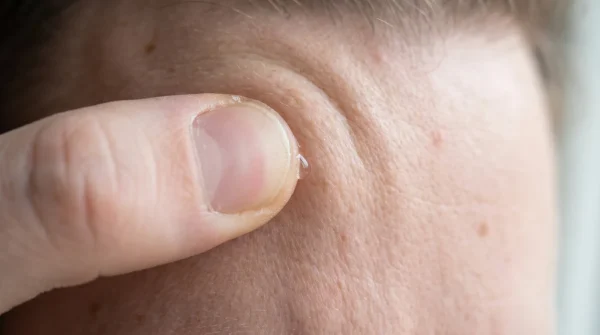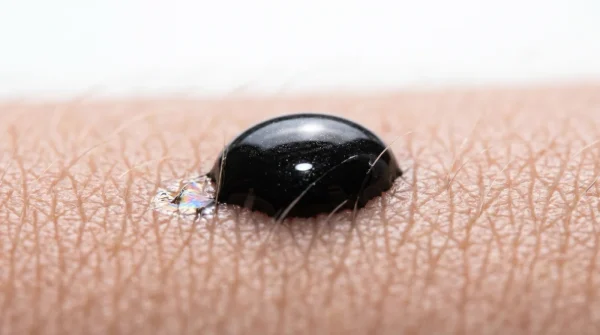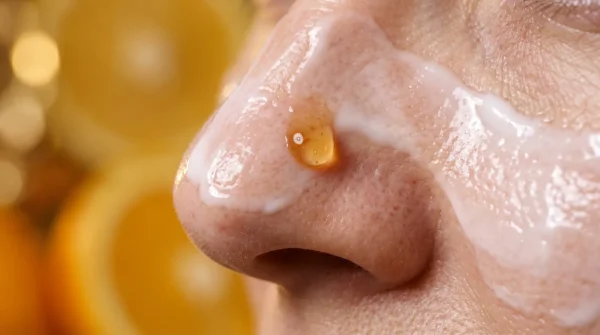
The morning light hits the bathroom mirror, cold and unforgiving. You uncap the familiar plastic tube, listening to the satisfying click of the wand pulling loose. You swipe a generous crescent of liquid under your eyes, over that stubborn red mark on your chin, and immediately reach for your damp sponge. Panic sets in the longer it sits, driving a frantic tapping motion as you try to erase your tired nights before the product dries down.
But when you finally pull the sponge away, the darkness is still there. Your coverage has completely vanished into the foam of your blender, leaving behind a thin, translucent film that settles immediately into fine lines. You assume the formula is to blame, or perhaps your skin prep was wrong, so you add another layer. The cycle repeats, building a heavy cake of product that looks exhausted by noon.
Walk into any bustling editorial backstage, and you will notice a bizarre stillness amidst the chaos. Models sit in tall chairs with dots of pigment resting on their faces like abstract art. The artists are not rushing with their brushes. They are stepping back, sipping coffee, and letting the air do the heavy lifting.
This is the quiet divide between following instructions and understanding the chemical system of your cosmetics. The very instinct you have to act quickly is exactly what robs your makeup of its true potential.
The Art of the Deliberate Pause
Think of your liquid concealer not as a paint, but as a culinary reduction on a hot stove. When you buy a bottle of concealer, you are not purchasing pure camouflage. You are buying a small amount of highly concentrated pigment suspended in a large pool of carrier liquids—usually water, silicones, or lightweight alcohols. These liquids exist solely to get the pigment out of the tube and onto your skin smoothly.
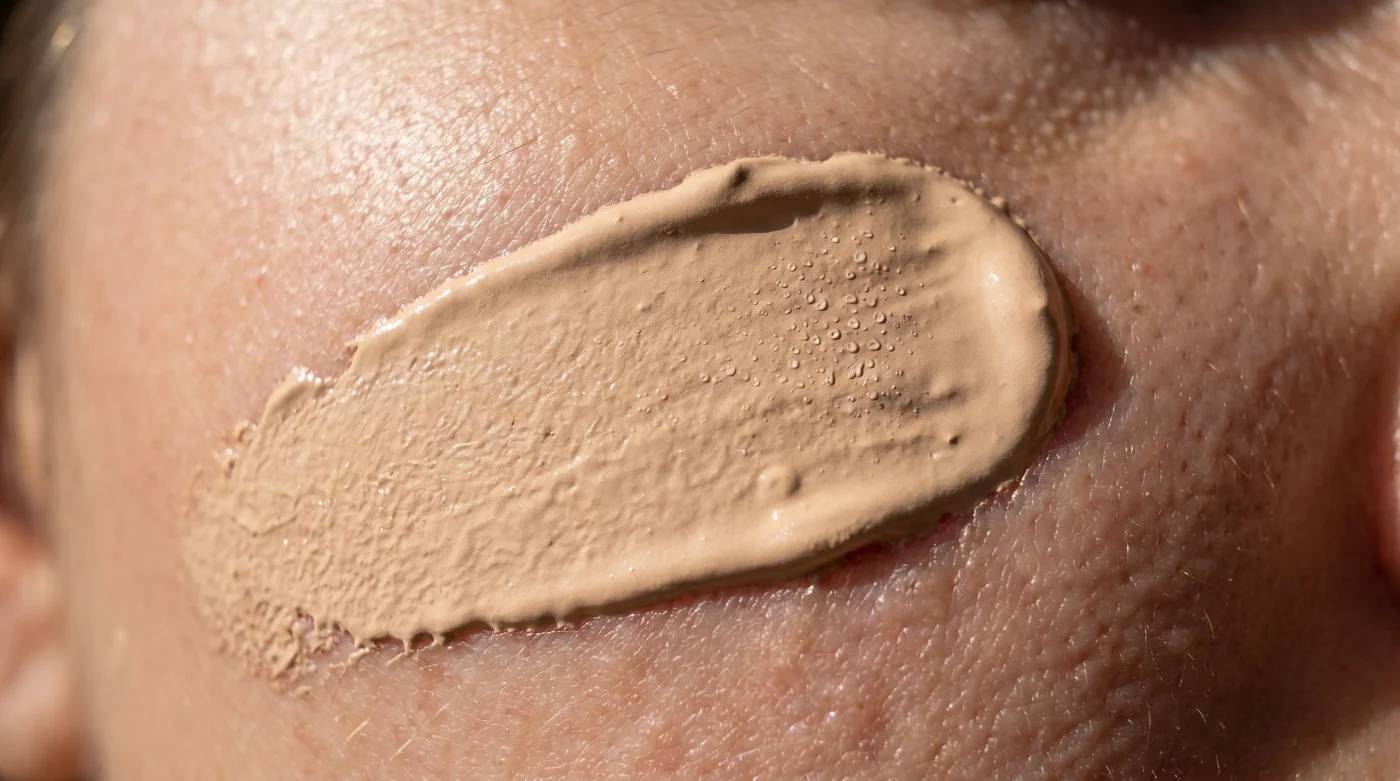
If you blend the moment the wand leaves your face, you smear the carrier liquids around your skin, diluting the pigment into a sheer wash. But if you allow a specific, deliberate pause, the warmth of your skin and the air in the room begin to evaporate those volatile liquids. The formula thickens. It becomes sticky, dense, and powerfully opaque.
This turns a perceived flaw—the fear of a product drying out and becoming unblendable—into your greatest tactical advantage. By waiting just two minutes, a sheer drugstore formula transforms into a high-end camouflage paste. You use half the product to achieve twice the coverage, bypassing the heavy, cakey buildup that ages your face.
I learned this from Clara, a 42-year-old prosthetic and editorial makeup artist whose work relies on making artificial skin look completely real under harsh studio lights. During a frantic fashion week in New York, I watched her dab a cheap, thin liquid concealer over a model’s deeply bruised knee. Instead of blending, she pulled out her phone and set a literal timer for two minutes. ‘If you chase the water, you lose the paint,’ she told me, lightly tapping the now-tacky edges into the skin with her ring finger. The bruise vanished entirely with a single, paper-thin layer. It was a shared secret among the veterans: patience creates powerful opacity.
Tailoring the Timing to Your Formula
Not every bottle on your vanity behaves the exact same way. The evaporation rate depends heavily on what is carrying the pigment, meaning your waiting period requires a slight adjustment based on your specific texture.
- The pantry staple that replaces high-end brow serums
- The 30-second morning facial release that acts like free Botox
- The nighttime routine mistake that destroys your Retinol Cream progress
- Dermatologists warn against leaving Micellar Water on your face
- The $10 pharmacy staple that outperforms luxury Hyaluronic Acid after 50
- Women over 40 are applying Vitamin C backward
- Clinical study exposes forever chemicals hiding in Waterproof Mascara
- Major retailers abruptly pull popular Talcum Powder cosmetics from shelves
- The bedtime supplement that completely changes morning skin texture
- Professional makeup artists never blend Liquid Concealer immediately
For the Hydration Seeker: If your daily go-to is a serum-based or highly moisturizing formula, it is loaded with squalane, hyaluronic acid, and extra water. These take the longest to flash off. You can safely leave these on the skin for up to three minutes. The hydrating oils will sink into your epidermis, leaving the pigment stranded perfectly on the surface, ready to be gently pressed into place.
For the Matte Purist: Formulas marketed as soft-matte or 16-hour wear rely on fast-evaporating alcohols and dry silicones to lock down quickly. Treat these with a bit more urgency. A sixty-second wait is your sweet spot. Any longer, and the pigment will latch onto your skin like cement, forcing you to tug at your delicate eye area.
For the Blemish Strategist: When covering an active, raised spot, the texture of the skin is already compromised. You want maximum thickness. Apply a tiny dot directly to the center of the redness and leave it completely alone for two full minutes. Do not blend the center at all; only feather the outer perimeter. The thickened liquid acts like a customized spackle, gripping the raised texture instead of sliding right off it.
The Two-Minute Pigment Protocol
Mastering this technique requires a shift in your physical rhythm. Instead of doing your makeup in a linear, continuous sequence, you will now build intentional gaps into your routine. This is about working smarter, using the ambient temperature of your room to cure your coverage.
Start by applying your skincare and waiting until your face feels like soft cotton, not a slick sheet of glass. Excess oil will disrupt the evaporation process. Follow these precise steps for your new rhythm:
- Dot the liquid exactly where you need darkness neutralized—typically the inner corner of the eye and the outer shadow.
- Step away from the mirror. Use this time to brush your teeth, fill in your eyebrows, or simply breathe while the carrier liquids begin to flash off.
- Notice the texture change. The edges of the dots will turn slightly matte, signaling the liquid has reduced to a tacky glaze.
- Take a dense, synthetic brush or your ring finger—never a damp sponge, which reintroduces water—and press straight down in a stippling motion.
Your tactical toolkit is simple: A dry room temperature, a dry application tool, and exactly 120 seconds on the clock. The cream should tremble slightly under your touch, thick and resistant, rather than slipping across your cheekbone.
Reclaiming Your Morning Minutes
There is a strange, quiet comfort in changing how you approach your reflection in the morning. When you stop fighting your cosmetics and start letting their chemistry work for you, the frantic energy of getting ready begins to dissipate. You are no longer scrubbing at your face with a sponge, hoping for a miracle.
Waiting those two minutes is not a delay in your day. It is a built-in moment of stillness. It demands that you pause, drop your hands, and let the process happen without your constant intervention. You realize that you do not need more expensive products, thicker layers, or complicated baking routines.
You only needed to give the formula the space to become what it was designed to be. In a culture that demands immediate results from every action we take, there is profound satisfaction in knowing that the best outcome requires simply stepping back and letting go. Your face remains light, your coverage holds firm, and your morning breathes just a little easier.
‘The difference between heavy makeup and flawless skin is almost entirely determined by how much water you allow to leave the face before you start blending.’ – Clara M., Editorial Artist
| Key Point | Detail | Added Value for the Reader |
|---|---|---|
| The Carrier Evaporation | Liquid formulas contain water or silicones that dilute pigment. | Prevents sheer-out, doubling the coverage of your existing products. |
| The Tool Choice | Damp sponges reintroduce water to the reduced pigment. | Keeps the formula intact; switching to fingers or a dry brush saves product. |
| Formula Timing | Hydrating serums need 2-3 minutes; matte formulas need 60 seconds. | Customizes the technique to your specific skin type, preventing unblendable patches. |
Frequently Asked Questions
Does this work for mature skin with fine lines? Yes. Because you are evaporating the liquid before blending, you can use significantly less product, which means there is less bulk available to settle into creases.
Will the concealer dry out too much to move? Only if you wait past the sweet spot. Aim for a tacky, sticky texture rather than a completely dry crust. Adjust your timing based on your room’s humidity.
Why can’t I use my damp beauty sponge? A wet sponge adds water back into the pigment you just spent two minutes reducing. If you must use a sponge, ensure it is almost entirely dry, or use a dense brush instead.
Do I still need setting powder after doing this? Often, no. Because the carrier liquids have evaporated, the pigment grips the skin naturally. If you have very oily skin, a light dusting is sufficient.
Can I do this with liquid foundation as well? Foundation is meant to be spread across large areas, so you generally want those carrier liquids to help it glide. Save the deliberate pause for targeted camouflage only.